
The perfect storm for tourism marketing is upon us. This is the year we celebrate the 250th anniversary of the United States, and the 100th anniversary of Route 66, the Main Street of America.
In the world of destination marketing, once in a while a moment comes along that changes everything and 2026 is one of those moments. This year marks a milestone that invites celebration from sea to shining sea. These twin anniversaries aren’t just commemorative dates on a calendar. They’re storytelling lightning rods. They give destination communities a reason to say, “Come here NOW.” And they give travel writers a hook and sponsors a platform.
But turning that buzz into measurable visitation and economic impact requires more than wishful thinking. It requires a coordinated tourism marketing strategy built on a solid foundation. And that foundation is the place where stories come alive and search engines deliver travelers. It is a well-curated, active events calendar.
When travelers are planning a trip, the first thing they want to know is: What’s happening when I’m there? An accurate, engaging event calendar doesn’t just inform. It inspires travel decisions and showcases regional vibrancy. And it tells a weekender visiting from Phoenix that the Saturday rodeo is worth the detour, and it tells an international guest that this city is where you will enjoy a memory making cultural experience. More than that, an up-to-date and comprehensive events calendar build community trust. Nothing frustrates a visitor like old, canceled, or incomplete listings.
A comprehensive and accurate calendar boosts web engagement. Event calendars are often among the most visited pages on destination sites.And a well curated calendar amplifies SEO. It is a fact that fresh, structured event data attracts organic search traffic and long-tail search queries. And that translates into sponsor value and monetization opportunities.
In short, an executive directing a tourism strategy isn’t just selling “days in town” and “heads in beds.” They’re selling experiences. And those experiences are anchored in event calendars.
Lots of tourism software platforms are available that play in related spaces. They provide CRM, website design, digital marketing, visitor analytics, and more. But none offers the automated, all-in, always-fresh event ecosystem that destination marketers need in 2026.
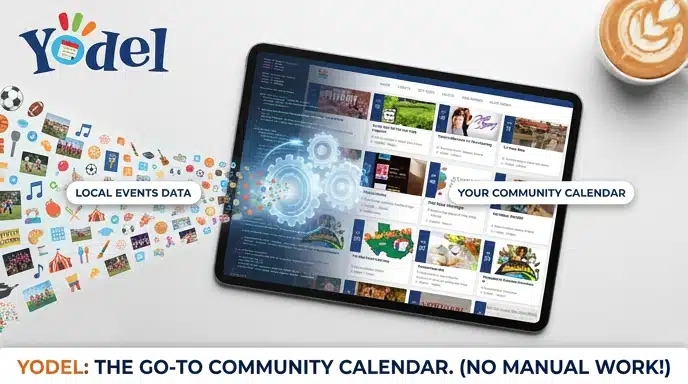
What sets Yodel apart is automated event curation. Yodel uses AI to pull local happenings from websites, social media, public calendars, APIs, and more. It also filters out duplicates and low-quality data. As a result, your calendar stays current without hours of manual data entry. Yodel also ensures a mobile friendly and responsive events calendar. Events look great and work well on any device. This is crucial when visitors plan on phones while on the road.
Your event calendar will be curated to your brand. Organizations retain full control over what appears, giving you editorial oversight while harnessing automation. Monetization is automatically built into a Yodel curated event calendar. With sponsor banners and premium placements directly in the calendar widget, Yodel turns your events page into a revenue stream.
Yodel’s event content expands your search footprint by capturing hundreds to thousands of event-related keywords your site might otherwise miss. So, while legacy tourism solutions like Tempest, Simpleview, Madden Media, or Chamber management tools are terrific for CRM, creative services, digital campaigns, and visitor insights, they don’t automatically populate, curate. And they don’t filter, brand, or monetize local events without major custom work or dedicated staff time.
These other platforms are often tied to heavy implementation costs, steep learning curves, or add-on modules. And once the calendar work begins, tourism teams find they need extra resources just to keep event data current. Yodel? It takes that labor-intensive task off your plate, saving staff hundreds of hours per year and letting your team focus on strategy, storytelling, and community engagement. No more spreadsheet wrangling!
A full and accurate calendar isn’t just good for travelers. It’s good for local businesses, sponsors, hotels, and your entire tourism ecosystem. When visitors plan to attend events, they stay longer, spend more, and return home as ambassadors for a destination. And because Yodel’s calendar solutions can include sponsor placements and premium visibility, your events calendar becomes not just a marketing hub but a revenue engine. It directly supports your organization’s financial goals without hiring new staff or adding hidden costs.
This year offers a once-in-a-century promotional opportunity. The 250th anniversary of the United States will draw history buffs, families, and global travelers. The centennial of Route 66 will bring classic car clubs, road-trip enthusiasts, heritage travelers, and people hungry for content. To get an idea just how large these anniversaries are, the opportunities they provide, and to spak a few marketing ideas, take a look at the Jim Hinckley’s America website.
But even the most powerful anniversaries need a strategic, purpose-built marketing foundation. A dynamic Yodel event calendar isn’t a bolt-on feature. It’s where storytelling becomes discovery, inspiration becomes itinerary, and curiosity becomes conversion. Building your 2026 strategy starts with what’s happening and where people can find it. With Yodel as the cornerstone of your events strategy, you’re not just filling a calendar. You’re shaping the travel stories that will define this milestone year.